Apologies and the Art of the Apology
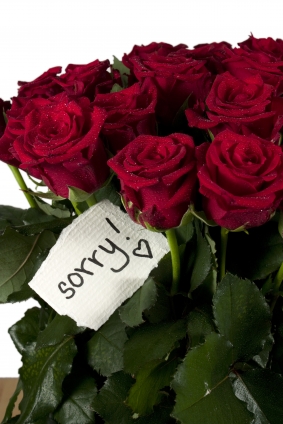
The perfect moment to apologize is the moment you realize you’ve done something wrong. —Martha Beck
Contrary to the old movie line “Love means never having to say you’re sorry,” the fact is, “Love DOES mean having to say you’re sorry.” In fact, saying you’re sorry is the best way to say the relationship matters to you.
I’ve spent most of my life apologizing for something or other. Some of my apologies I regret - like anytime someone screamed at me and I apologized just to get them off my back.
But most apologies I’ve made I’m glad I did. Why? Contrary to popular belief, apologies don’t make you look weak. They make you look smart, caring, strong, open, responsible, mentally and emotionally healthy, and willing to own up to your actions. When you apologize you acknowledge that you see the error of your ways - and that you recognize you need to change something. Improvement is always a good move. But the most important aspect of any apology is that it shows you value the relationship between you and the person. When people apologize - even if it is to a client, a customer, a family member, a co-worker or even a stranger the message it sends is - “I care about this relationship and its future.” And that’s a pretty powerful message to send. Not apologizing when an apology is needed or deserved sends the opposite message just as strongly - “I don’t care about this relationship and I don’t need you.”
People who care more about themselves than others have a hard time apologizing. People who feel weak, uncertain or resentful or don’t respect themselves or others also have a hard time apologizing. People who don’t value the relationship rarely apologize. Losers in general find it impossible to apologize. Only people who are committed to being the best they can be can give a sincere apology. Only those people who are able to see they were wrong, admit to it, own up to it and change it are even capable of apologizing. Even if you feel confident, secure and good about yourself and your intentions you may still feel reluctant about apologizing.
So, if being able to apologize well is such a good thing, why is it so hard for so many people to do?
One: We all hate to be wrong. But it’s a fact of life, you’re going to be wrong. Get used to it.
Two: We think that admitting we’re wrong is weak - but it’s not. It’s smarter than making a mistake and being unwilling or unable to acknowledge that. People think if you did a bone-head thing once and won’t admit it that you’re likely to do it again. And who needs that?
Three: Admitting you were wrong means you’re also admitting you need to change and a lot of people don’t want to change.
Four: We honestly don’t value the relationship with the person we need to apologize to.
So what do you do? You practice.
One: Begin practicing small apologies that don’t threaten your sense of self-esteem. When you bump into someone say, “I’m sorry. I didn’t mean to bump you. Are you okay?” When you show up even five minutes late, apologize. No excuses. Just, “I’m sorry I’m late. I didn’t mean to hold everyone up.”
Two: Go back and apologize for something you should have apologized for at the time, but didn’t have the courage or backbone to apologize for at the time.
Three: Wait. Each of us, being human, will do several things a day, or at least a week, that we need to apologize for. It can range from being selfish, to insensitive - as in, “I just realized you asked me to help you with the house cleaning this week and I haven’t. I’m sorry. What is there I can do right now to make it up to you?”
When you practice apologizing for the small things, it’s a lot easier to tackle the big apologies when they come up.
“I was supposed to pick you up at the airport today?! OMG! I’m SO sorry! I’m on the lake with the guys fishing right now. There is no way I can be there in less than two hours.”
Apologies are course corrections in our relationships. They keep the relationship intact - but only when offered with sincerity and with a commitment to change or stop the behavior that prompted the apology to begin with. If you don’t change or stop the behavior once you acknowledge it - then the apologies cease to have an impact, you stop having any credibility, and the relationship is often permanently damaged. Saying, “I’m sorry I’m late, it won’t happen again,” is okay if it doesn’t happen again, or doesn’t happen without good reason (I had a car wreck on the way is a good reason. “I forgot,” is not).
All that said, I confess. I have not mastered the art of the apology, but I’m working on it. What I do know is that I draw strength and courage from recognizing that we’re all better off for apologizing when the situation arises. Do it, as Martha says in her quote above, as soon as you recognize you’re wrong. Do it sincerely. Do it to save or protect the relationship, and then having apologized and made amends, move on. You’ll be the better person for having done so.